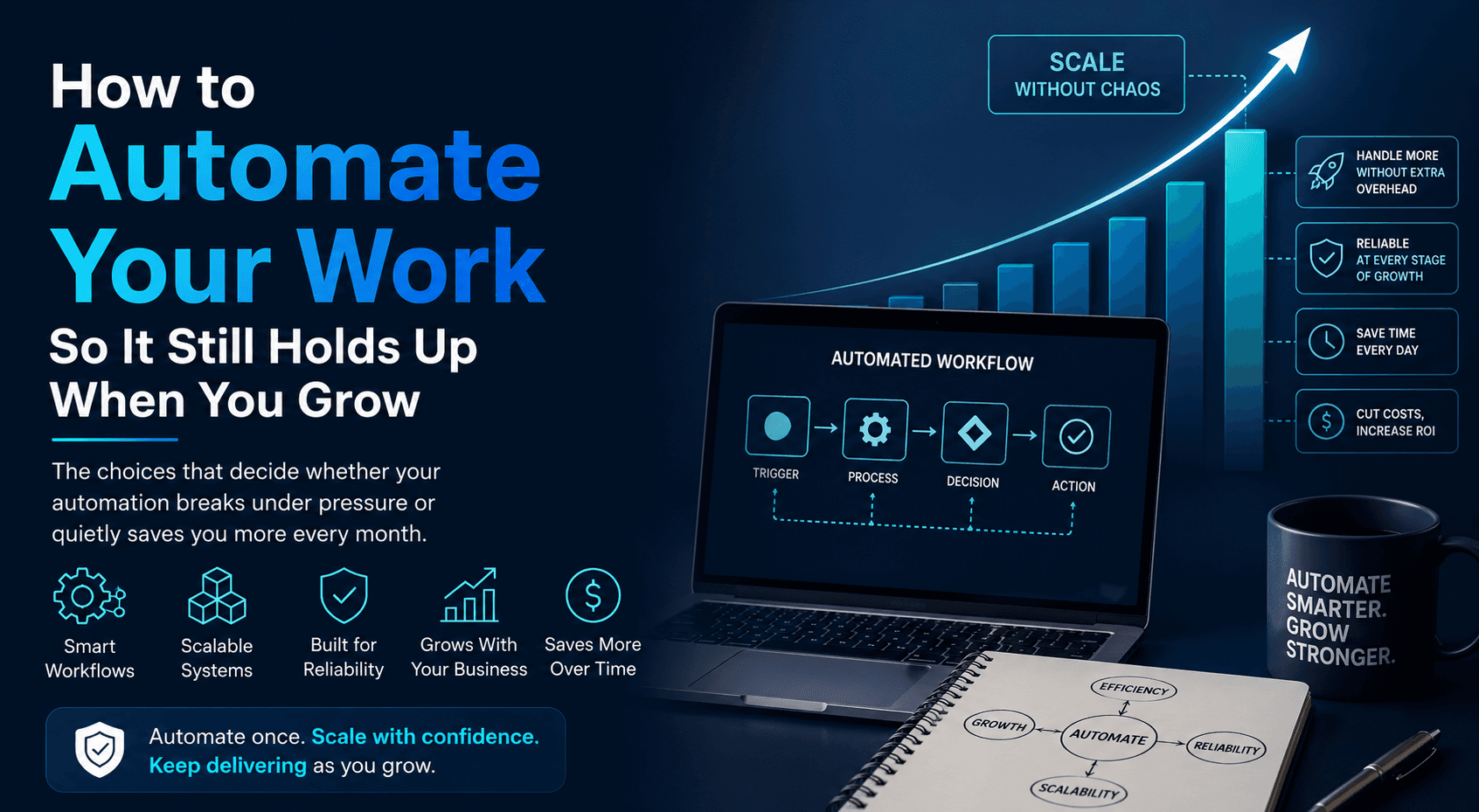
There's a specific kind of pain that hits growing businesses. The automation that saved you ten hours a week at fifty orders a day starts silently dropping things at five hundred. Nobody notices until a customer does. The fix usually isn't more automation — it's automation built to survive growth in the first place.
Why automations break when you grow
Most quick automations are built for the happy path — the version where every input is clean and nothing goes wrong. That works beautifully at low volume, because a human is quietly catching the exceptions you never see. Scale up, and the exceptions scale too. Suddenly there are too many for anyone to catch, and they slip through as silent failures.
The difference between automation that breaks and automation that holds isn't how clever it is. It's how it handles the messy edges.
Design for the messy 20%, not the clean 80%
Before you automate a task, spend an hour listing everything that can go wrong with it. The duplicate order. The customer who replies in a different language. The payment that half-completes. These edge cases are where automation earns its keep — or quietly fails.
- Decide what happens to anything the system can't handle — it should land in a clear queue, never vanish.
- Make every automated action reversible or logged, so a mistake can be found and undone.
- Set a threshold above which a human is asked to confirm, instead of letting the machine guess.
Make failures loud, not silent
The most dangerous automation is the one that fails without telling anyone. Build in a simple alert when something doesn't complete, a daily count of what was processed versus what was skipped, and a place where stuck items wait for a human. You want to learn about a problem from a dashboard, not from an angry customer.
Good automation doesn't just do the work. It tells you when it couldn't.
Keep humans in the loop where it matters
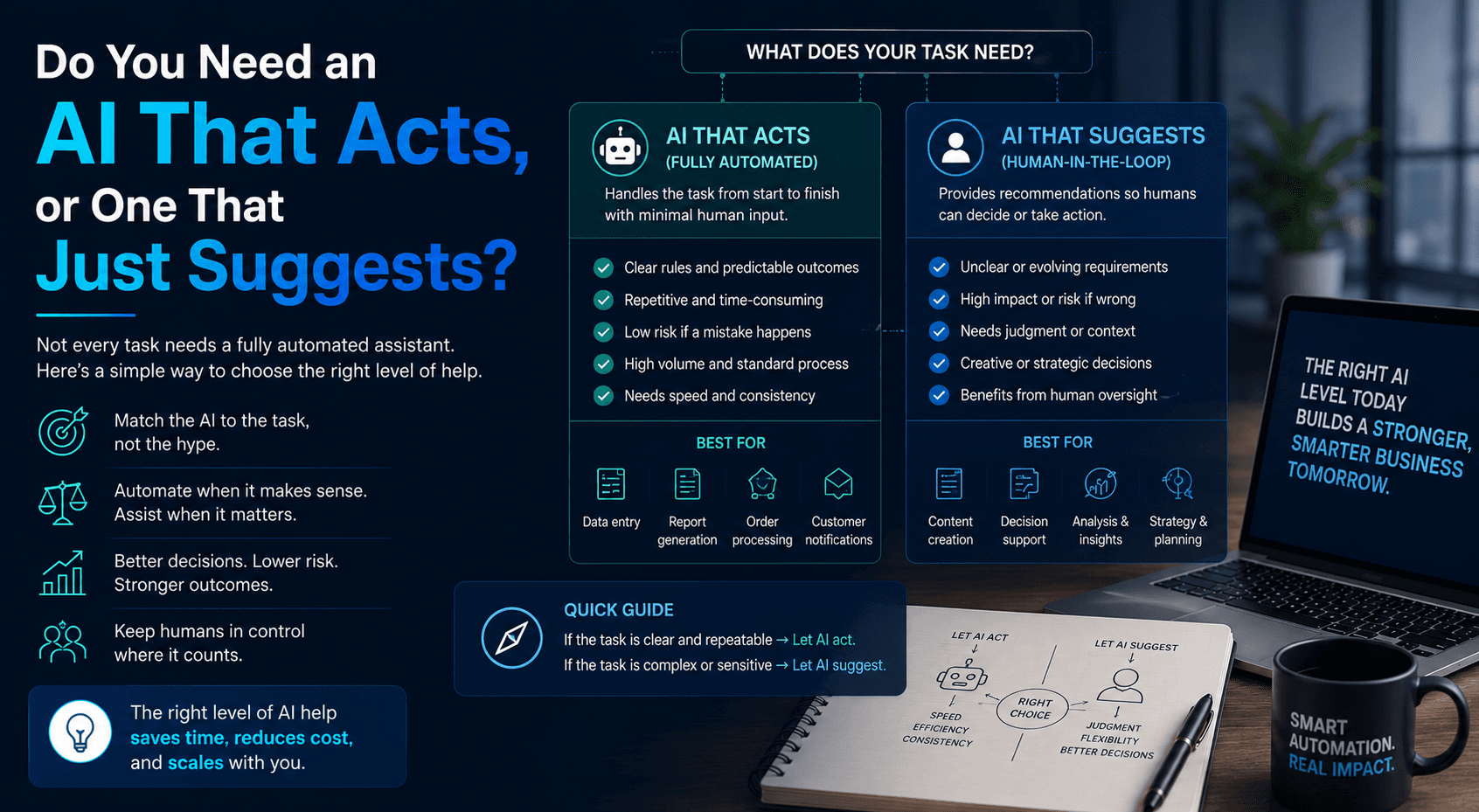
Full automation is the right goal for low-risk, high-volume work. But for decisions with real consequences — refunds above a limit, anything touching a regulated process, messages that go out under your brand — keep a person in the loop. The system does the heavy lifting and proposes the action; the human approves it in one click. You get most of the speed with almost none of the risk.
Build it to be handed over
An automation only one person understands is a liability waiting to happen. Document what it does in plain language, name an owner, and make sure someone other than the builder can pause it, fix it, or explain it. The automations that survive scale are the ones your team owns — not the ones they're afraid to touch.
Get these foundations right and automation stops being something you babysit. It becomes infrastructure — quietly saving you more every month as you grow, instead of more to worry about.
Written by StayClever Team